


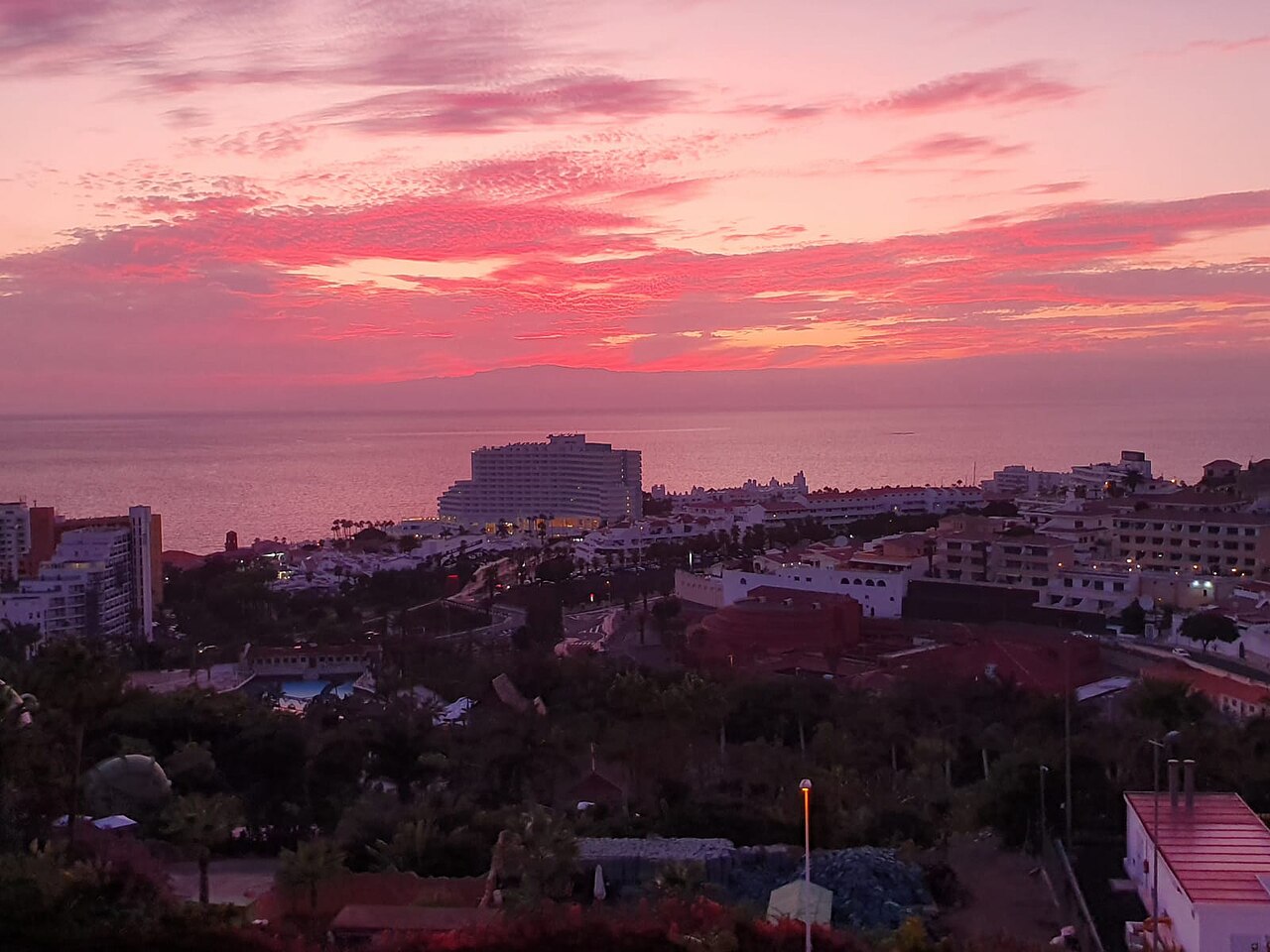
When you step off the plane at Tenerife South and feel that gentle breeze on your face, you’re experiencing one of the Atlantic’s most fascinating weather phenomena: the trade winds. These constant, predictable and remarkably stable winds are the invisible force behind every paragliding flight we run at Brisa. Without them, the south of the island simply wouldn’t be the paradise of clear skies and perfect conditions that allows us to fly more than 300 days a year.
If you’re thinking about paragliding in Tenerife and have questions about the wind, the weather or safety, this article will explain why the trade winds don’t just make your adventure possible — they make it truly exceptional.
What Are the Trade Winds and Where Does the Name Come From?
The trade winds are tropical air currents that blow consistently from the north-east towards the south-west. The name derives from the Old French word alizé, meaning “smooth” or “favourable” — a term used by 15th-century sailors to describe the reliable winds that carried their vessels across to the Americas.
In the case of the Canary Islands, the trade winds are generated by the Azores High, a vast area of high atmospheric pressure situated to the north of the archipelago. This system acts as the climatic engine of the subtropical Atlantic, sending cool, moist air from the north-east (NE) towards the islands throughout virtually the entire year.
Where Do the Trade Winds in the Canaries Come From?
The trade winds travel thousands of kilometres from the northern Atlantic, gathering moisture as they skim the surface of the ocean. By the time they reach Tenerife, they collide with the island’s dramatic terrain — particularly the imposing natural barrier of Mount Teide, which at 3,718 metres acts as a protective shield.
This rugged topography forces the moist air to rise along the windward slopes (the northern and north-eastern side of the island), where it cools, condenses and forms the characteristic low clouds known as stratocumulus. Locally, this blanket of cloud is called panza de burro — literally “donkey’s belly” — and it’s the most iconic sight in northern Tenerife: La Orotava, the Valle de Güímar and Los Realejos regularly wake beneath a sea of cloud that rarely exceeds 1,200 metres in altitude.
How the Trade Winds Shape Tenerife: Two Islands in One
Here’s where it gets truly fascinating: Tenerife is, quite literally, two entirely different worlds divided by a single mountain.
Windward (North): Lush and Green
On the windward side, where the wind meets the island head-on, the trade winds bring constant moisture. This feeds the laurel forest — an ancient ecosystem that feels as though it belongs in a fairy tale. The result is a northern coastline that is green, cool and frequently overcast.
The key to this process is the thermal inversion — a layer of warm air that acts as a natural lid, trapping cloud between 800 and 1,200 metres. This cloud ceiling prevents the moist air from rising further, keeping the sky clear above it.
Leeward (South): A Paraglider’s Paradise
And this is where the magic happens for us. As the trade winds cross the central peaks of the island, they shed all their moisture. The air descends down the southern slopes — a process known as the Föhn effect — warming and drying further as it goes, creating ideal paragliding conditions: laminar airflow, clear skies, pleasant temperatures and extraordinary atmospheric stability.
Costa Adeje, where we operate at Brisa, sits squarely in the leeward zone. Thanks to Teide holding back the trade winds on its northern face, we enjoy more than 300 flyable days a year, with those turquoise Atlantic views shimmering beneath an unrelenting sun.
Trade Wind Direction in the Canaries: Why It Matters for Your Flight
The trade winds blow from the north-east with remarkable consistency, which allows us to predict flying conditions with great precision at any point during the day. This specific direction matters because it determines:
- The choice of launch site: Our launch point at Taucho (800m) is strategically positioned to make the most of the laminar airflow as it reaches the leeward zone.
- The flight path: From take-off, the majestic Teide dominates the horizon behind you, while beneath your feet the dramatic depths of the Barranco del Infierno — one of the most spectacular natural spaces in southern Tenerife — unfold below.
- Landing safety: The trade winds ensure that air reaches the coastline smoothly and predictably, allowing us to land with complete precision on the sands of Playa de la Enramada, right in the heart of Costa Adeje.
The low relative humidity of the south contrasts sharply with the north, and it’s precisely this that delivers that sensation of fresh but never cold air — perfect for keeping the paraglider stable and controlled throughout the flight.
Trade Winds in the Canaries: When Do They Blow and Which Months Are Strongest?
One of the most common questions we receive at Brisa is: “When is the best time to fly?”
The Trade Winds Blow Almost All Year Round
The trade winds in the Canary Islands are a near-permanent feature, though their intensity varies with the season:
- Spring and Summer (April – September): This is when the trade winds are at their most powerful. The Azores High strengthens and stabilises, bringing more consistent winds and exceptional flying conditions. During these months, the “sea of cloud” in the north is at its most persistent, while in the south we enjoy completely clear skies.
- Autumn and Winter (October – March): The trade winds remain, but with less intensity. Paradoxically, winter is one of our favourite seasons to fly, because the combination of cloud, sunshine and gentle thermals creates ideal conditions for longer, more contemplative flights. Temperatures at altitude remain pleasant, particularly around midday.
At Brisa, we tailor every flight to the conditions of the day, always prioritising your safety and enjoyment.
Why the Trade Winds Make Tenerife the Best Paragliding Destination in Europe
If you compare Tenerife with any other European paragliding destination, the difference is striking. The trade winds offer something very few places in the world can match: predictability.
Atmospheric Stability: The Foundation of Safe Flying
The trade winds deliver laminar airflow — smooth, without sudden turbulence. This is fundamental for tandem flights, particularly if it’s your first time in the air. You won’t experience erratic movements or unexpected gusts. The wind is like an invisible carpet supporting the paraglider with the utmost gentleness, allowing you to relax and savour every second aloft.
More Than 300 Flyable Days a Year
Whilst in the Alps or the Pyrenees flying conditions depend on narrow weather windows, in southern Tenerife the trade winds mean we can fly on virtually any day of the year. You don’t need to plan your flight weeks in advance — you can book for tomorrow with complete confidence.
Your Flight with Brisa: An Experience Shaped by the Trade Winds
At Brisa, we leave nothing to chance. Every flight is a natural choreography in which the trade winds play the leading role.
Before the Flight: Reading the Weather
Our pilot-instructors, with more than 25 years of international experience, study the trade wind conditions every morning: precise wind direction, speed, cloud base height, thermal development and relative humidity. This careful assessment allows us to select the optimum launch site and ensure your flight is as safe as it is memorable.
During the Flight: Sensations Like No Other
From the moment your feet leave the ground at Taucho, the trade winds hold you with a firm yet gentle embrace. No sudden jolts, no unexpected drops. Just the silence of the glide and the whisper of laminar wind across the canopy.
Your pilot-instructor will harness the thermal currents generated by the temperature contrast between the mountain and the sea, allowing you to gain height smoothly. On particularly favourable days, we can climb above 1,000 metres, giving you a privileged view of the entire Costa Adeje coastline, from Los Cristianos to Playa Paraíso.
The Landing: Smooth as You Like
Thanks to the consistency of the trade winds, landing at Playa de la Enramada is always controlled and gentle. Your pilot will guide you on exactly when to stand up and walk through the final few metres. Your feet will touch the sand so softly you’ll barely notice the moment of touchdown.
The Right Attitude
The most important thing you can bring is your trust in the Brisa team. From the moment we collect you from your accommodation in Costa Adeje, Playa de las Américas, Los Cristianos, Playa Paraíso or Callao Salvaje, you’ll be in the hands of professionals who know the trade winds like the back of their hand.
Frequently Asked Questions About the Trade Winds and Your Flight
Do the trade winds make flying safer?
Absolutely. The trade winds are the primary reason why southern Tenerife is one of the safest places in the world to go paragliding. Their consistency and predictability eliminate the risk of unexpected turbulence, ensuring a stable and controlled flight at all times.
Can I fly if the trade winds are very strong?
Safety is our absolute priority. When wind speed exceeds 20 km/h, we do not fly, as it compromises both safety and the quality of your experience. However, thanks to the topography of Adeje and the protective effect of Teide, wind intensity at our launch sites is generally moderate.
What happens if conditions change?
The trade winds are extremely stable, but in the unlikely event that weather conditions are not optimal, we will contact you to reschedule your flight. Our commitment is to give you the best possible experience, and that only happens when the natural elements are on our side.
Do the trade winds only affect summer?
No. The trade winds are present throughout virtually the entire year in the Canaries, though with variations in intensity. At Brisa, we fly 365 days a year, adapting our operations to the specific conditions of each day.
Book Your Flight with Brisa: Let the Trade Winds Carry You
The trade winds are far more than a meteorological phenomenon — they are the soul of paragliding in southern Tenerife. They are the guarantee that your experience will be safe, smooth and utterly unforgettable.
At Brisa Paragliding, we have spent more than 25 years reading the language of the trade winds, understanding their nuances and harnessing their generosity to share the magic of free flight with you. Every time we launch from the slopes of Adeje, we do so with the certainty that we are in the finest place in the world for this adventure.
Ready to feel the trade winds on your face? Book easily via WhatsApp or through our website booking form. No previous experience is required — just a genuine desire to live an experience that will stay with you long after you’ve landed.
Your flight is waiting. The trade winds are already blowing.
Quick contact:
- WhatsApp: Immediate response in your language (Spanish, English, French, German, Dutch, Italian)
- Website: Simple and straightforward booking form
- Free transfer included from the Costa Adeje area
At Brisa, every flight is unique and every passenger is special. Let yourself be carried by the wind that has captured the hearts of thousands of adventurers before you.